
“Hyper-scale” Data Centers… and the Hydronic Industry
QUESTION: Data centers have been around for decades. So, what’s changed?
The term “data center” was coined to describe the relatively modest buildings used to house Internet servers and data storage units that contain large sums of data.
Hallmarks of the Internet of the past 2 decades, including Netflix, Amazon, Google, and many other everyday tech companies utilize these data centers to accomplish the everyday tasks we associate with modern life, such as video streaming, website hosting, and online purchasing.
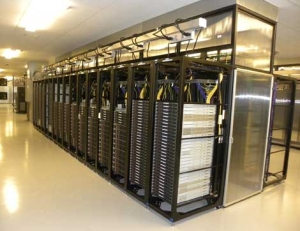
Yahoo data center, circa 2010. Credit: Yahoo
The AI “hyper scale” data centers, however, while also being called “data centers” and still looking like the ordinary ones, are entirely different structures.
Hyper-scale Data Centers
Nowadays, when you hear about data centers, people are referring to the new and massive AI hyper-scale data centers. These are the buildings that contain the colossal supercomputers that train and build AI models. These data centers are much unlike traditional colocation data centers whose job it is to transmit large amounts of streaming data.
These data centers instead intend to concentrate as much compute into these systems as they can, making them much less like Internet storage buildings and much more like the world’s highest performing supercomputers.
When I say colossal, I am understating it.
In fact, it’s impossible to overstate.
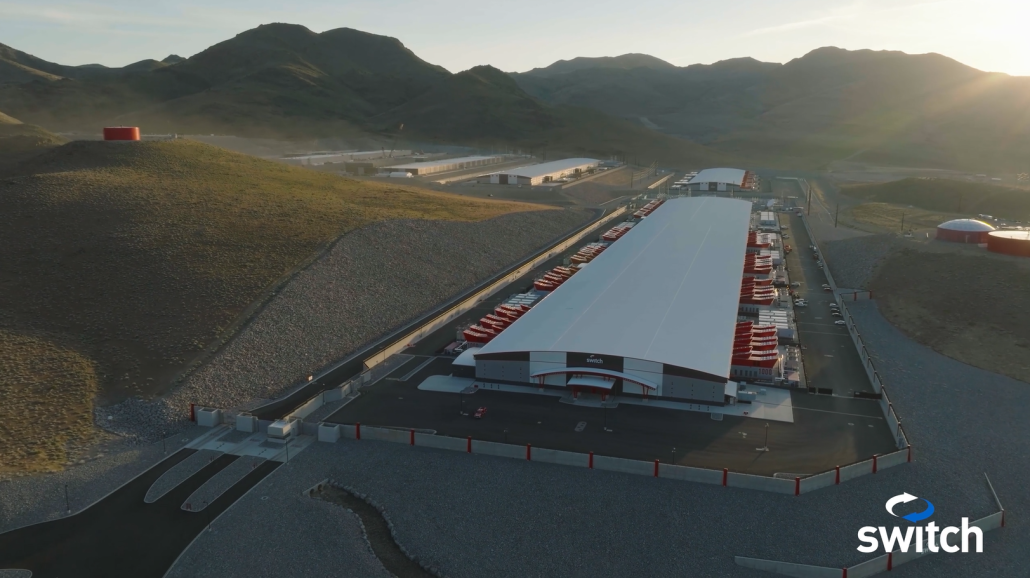
AI Data Center in Las Vegas. Credit: Switch AI
And not only is the scale of these buildings and models enormous, but their scale is also still growing, and exponentially.
A hyper-scale AI data center, similar to a supercomputer, consists of a large warehouse containing many hundreds of computing racks. A computing rack is a cabinet-sized stack of GPU’s (general processing units) which contain very high-performing computer chips.
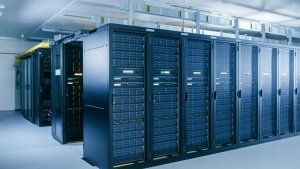
AI Data Center Racks. Credit: Getty Images
Here’s something to put it into perspective:
In 2018, the world’s largest supercomputer, Summit, contained 314 of these computing racks.
In 2025, a single NVIDIA NLV72 server rack, like one used in many AI hyper scale centers now, has 5 times the computing power of Summit.
Plans are currently in motion to house thousands of these racks in one building.
The growth of the industry is unbridled, too – the chips are getting more powerful every year, the racks are getting denser every year, and the size of the systems are getting even larger. All with no signs of stopping, only acceleration.
Now that I have your attention, let’s focus on what this means for the HVAC industry.
Liquid Cooling
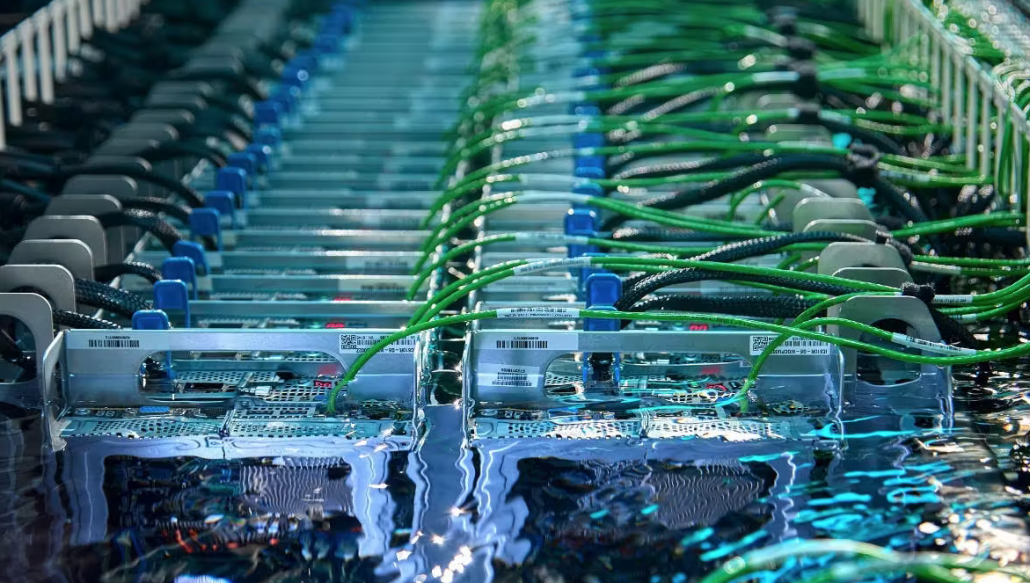
Liquid cooled computing. Credit: Hypertec
As the density of these processing units increases, the amount of energy released as heat is also increasing, despite huge increases in energy efficiency.
Traditional data center racks consume 3-7 kW of power. Despite increasing energy efficiency, the AI data center racks consume upwards of 100 kW of power.
Being that the vast majority of the power consumed by these devices exits as heat, all that heat needs to be pulled safely away from these devices to keep the dang things from melting or exploding. According to Tech Target,
“Computer servers are notorious for generating heat—and heat is notorious for being an enemy of computer servers.”
Here’s where our good friend liquid cooling comes in.

Liquid cooling in AI data center, built with aquatherm piping. Credit: Switch AI
Being that the density of a data center is increasingly prescient, air-cooled systems just don’t cut it anymore. Water systems can move heat much more effectively than air, making for discrete, compact, and efficient cooling.
Water can absorb approximately 4,000 times more energy per unit of volume than air.
Water cooled infrastructure in an AI data center requires the entire facility to revolve around the system. There must be floor room for pipes and room for cooling towers. It may be that this water-cooling infrastructure is large, costly, and involved, but in this hyper-scale model: density of the racks themselves is king, and the cost is very easily afforded.
While many data centers are only air-cooled, the newest and most cutting-edge facilities are built with liquid cooling, and it’s become standard practice to do so. Lower temperatures also offer higher-performing GPU’s, making liquid cooling increasingly necessary to compete.

Liquid cooling infrastructure built using aquatherm piping. Credit: Switch AI
Additionally, and very interestingly, Microsoft has developed an in-chip microfluidic cooling systemengineered to cool down these chips even faster.
Point being, liquid cooling for these data centers needs to be built, and there’s going to be a lot of it.
How fast is the AI data center industry growing?
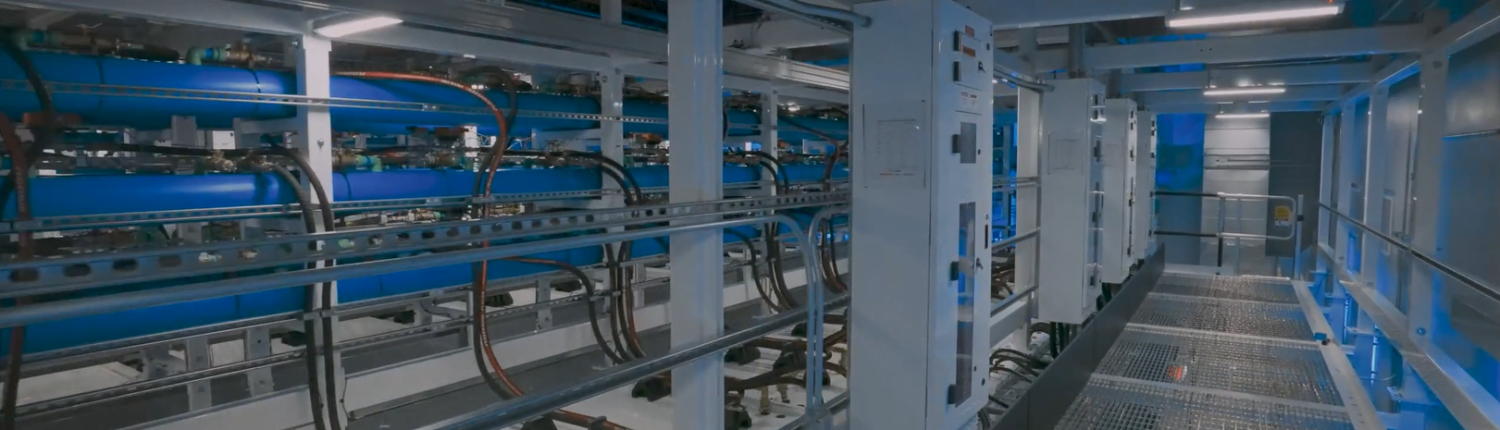
Liquid cooling system. Credit: Switch AI
The so-called “AI boom” is certainly explosive. When it comes to wondering how much liquid cooling infrastructure will actually be in demand, the answer is clear: much more than anyone could have predicted merely a decade ago.
The amount of money spent by hyper scale companies building this infrastructure in 2023 was $123 billion dollars. It’s a lot of money, but it pales in comparison to the $400 billion anticipated to be spent in 2026.
According to Goldman Sachs research,
“Data centers from the pre-AI era are increasingly ill-suited for the demands of today’s AI workloads, and the era of simple retrofitting is coming to an end.”
Not only are these systems getting bigger, but the industry is also growing too fast to retrofit. Meaning, older air-cooled systems will become obsolete, and likely be entirely rebuilt in a few short years with liquid cooling to compete. According to ABI Research,
“Cloud service providers Amazon Web Services (AWS), Microsoft Azure, Google Cloud Platform (GCP), IBM, Alibaba, and Oracle are investing billions of dollars in building data centers around the world. This will increasethe number of hyper-scale data centers from 567 in 2025 to 738 in 2030.”
That’s where we come in,
…the HVAC industry. In a landscape fueled by billions and billions of dollarsof speculative capital, and where the quality of a cooling system is related so closely to these tech companies’ success, the HVAC world has a huge opportunity to step up to meet demand.
aquatherm™ piping is uniquely prepared to meet the needs of these data centers: rapid construction, leak-free piping, high-density modeling, and corrosion-free systems for dealing with sensitive equipment.
Their PP-R piping is easy to install, offers a 10-year warranty, and is entirely corrosion free.
aquatherm™ offers BIM (building information modeling) software to orient collision-free piping schematics, highly necessary for the nature of compact and demanding environments of data centers. Also available is efficient prefabrication from their facility in Lindon, Utah.

aquatherm piping for data center use. Credit: aquatherm
Flo Fab™ offers custom fabricated pump skids for pumping the huge amounts of water required to make these systems safe, efficient, and possible. Their team will work closely with you to ensure only the highest quality pumping technology is used to bulletproof your system.
FloFab has tremendous experience with data center construction, and is more than prepared to meet any project’s needs with built-to-last custom skids.

FloFab pump skid purpose-built for data center use. Credit: FloFab
There are many components of these hydronic systems, like any, that are more like afterthoughts; strainers to protect equipment, valves, and other integral hydronic accessories.
Titan Flow Control, Inc. remains at your service to meet these needs, be they gargantuan or particular. Their many types of control valves, strainers, and check valves are all kept here in the U.S. for quick shipment and domestic service.

Duplex basket strainers at Titan FCI warehouse. Credit: Robert Warnell
We’re here to help.
At Air & Hydronic Specialties, we have your back.
We are real people, here in Las Vegas, Nevada, really dedicated to connecting the right projects with the right materials, with you through the retrofits, the new construction, and the maintenance.
In a time when the quality, efficiency, and pace of new construction matters more than ever with upcoming AI data center projects, we hope to be a part of the future with you.
Thanks for reading our article.
Contact us anytime.
rob.warnell@airhydronicspecialties.com or at insidesales@airhydronicspecialties.com
Office phone: (702) 902-2911
Written by AHS, released Oct. 13, 2025
